Featured Friday! Federico Carro
Federico Carro (born June 15, 1991) is an Italian author, screenwriter, and creative producer known for his expansive fantasy universe The King of Light, his award-winning novels, and his original film and multimedia projects. Raised in Vernazza, Italy, Carro developed early passions for art, storytelling, music, and world-building, which later shaped his multidisciplinary career.
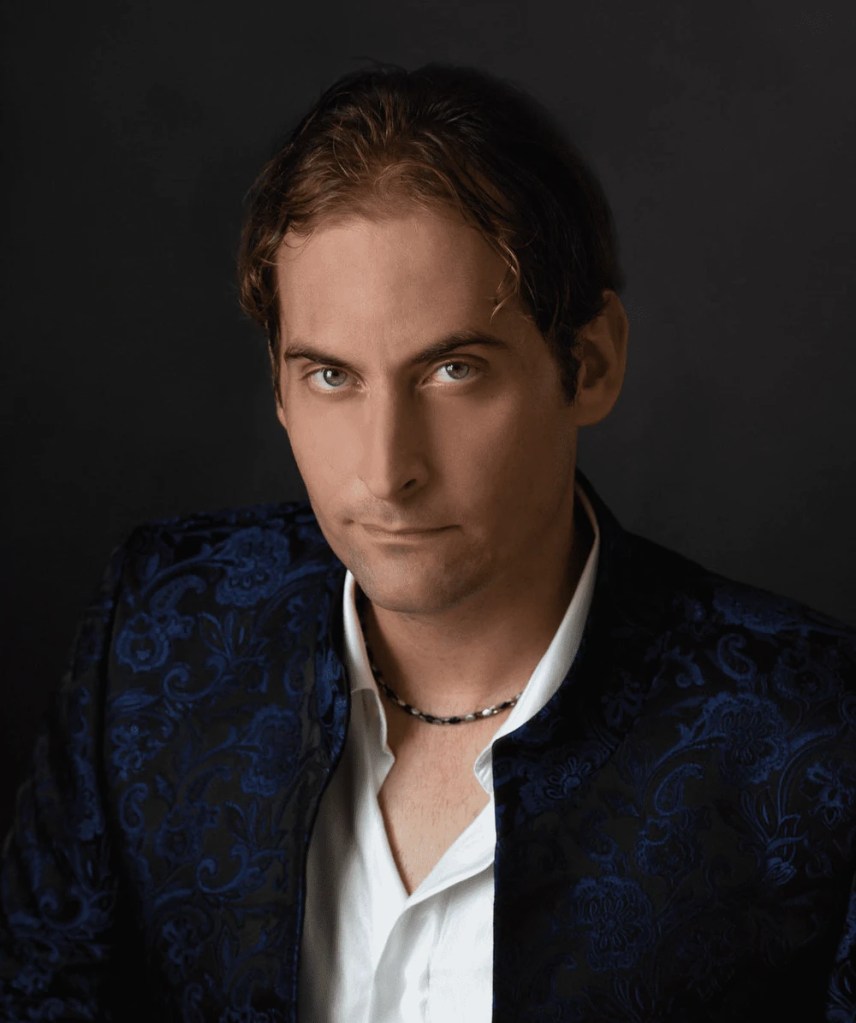
He debuted with the novel Il Segreto del Verziere and went on to publish multiple fantasy books, including The King of Light saga, now released in both Italian and English versions and recognized in international literary competitions. Carro has also written poetry collections and ventured into science fiction with the short story The Digital Boy.
Alongside writing, he developed a music career between 2015 and 2018, releasing three albums and several music videos, with singles that entered Italian and European indie charts. His artistic journey later expanded into screenwriting: he adapted The King of Light and The Secret of the Orchard into feature-film scripts, with The King of Light: The Order of the Dark Gods currently in pre-production and seeking financing.
Since 2020, Carro has been the creator of the YouTube channel Fedrick Fantasy Kingdom, producing narrative and analytical videos on cinema, fantasy, and pop culture. He also manages The Gamer Novelist blog, recently expanded with a dedicated YouTube channel, and built the world’s largest online resource about Vernazza, hosted on Fandom Wiki.
In recent years, Carro has continued refining his literary universe, developing new editions of his works, inventing original constructed languages, and producing teasers and visual content connected to his stories. His name gained national media attention in 2025 due to his involvement in the widely reported “Villa Pamphilj case,” which he is documenting in an upcoming nonfiction book.
Today, Federico Carro continues to work as an independent creative, developing novels, films, and multimedia projects rooted in fantasy, mythology, and emotional storytelling.
What’s your favourite part of the lifestyle of an Author?
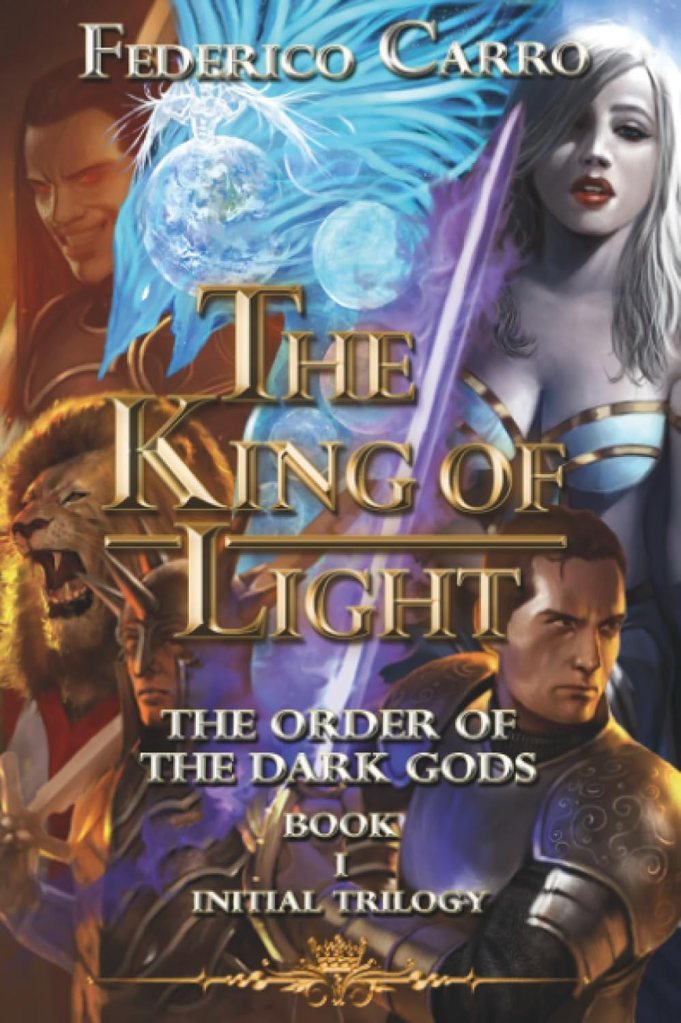
My favourite part of being an author is the creative freedom it gives me. What fascinates me the most is the ability to constantly build new worlds, new characters, new emotions, new landscapes, and new situations. Writing allows me to lose myself in ever-evolving realities, each one different and more innovative than the last. Since discovering the world of AI, this aspect has become even more fulfilling. Recently, I’ve created videos that showcase the characters, environments, bestiary, and orders from my novel The King of Light: The Order of the Dark Gods. Through AI, I’ve been able to transform my writing into a visual experience, turning imagination into something concrete and tangible. For me, that’s the magic of writing: the possibility to bring entire universes to life and to explore them endlessly.
What made you start writing?
Since I was a child, I’ve always been fascinated by creation. I loved drawing, and through my early experiences, I naturally moved toward writing. My first works were poetry, inspired by personal reflections, sometimes watching the sea in Vernazza, I would lose myself in thought, and verses capturing my sensations would come to me, which I put on paper. Later, inspired by the legends, characters, and landscapes of Vernazza, I wrote my first book, The Secret of the Orchard.
Is there an Author that you consider your inspiration?
I’ve always drawn inspiration from sensations and experiences, but over time I developed a deep appreciation for classic literature. I’m fascinated by Dante Alighieri’s writing in Tuscan, Boccaccio’s prose, and Petrarch’s poetry. I also enjoy modern fantasy worlds, such as Tolkien’s—The Silmarillion remains one of my favorite books—as well as works by J.K. Rowling and Stephen King. Classical Latin literature is another major influence: I’ve studied Virgil’s Aeneid, Caesar’s De Bello Gallico and De Bello Civili. English literature also inspires me, from Shakespeare’s plays to John Milton’s Paradise Lost. All of these authors have influenced parts of my characters, settings, and stories. For instance, the Dravite Forest in my novel The King of Light: The Order of the Dark Gods, a forest perpetually on fire with sapphire trees—is inspired by a circle of Dante’s Inferno, particularly the part where trees are broken by harpies and the trapped souls are transformed into human-like forms.
What’s your number one tip for an aspiring Author?
My number one tip is to always be yourself. Write whenever you feel inspired, even if you’re busy with other things. For example, whenever an idea, a character, a quote, or a scene comes to mind, I jot it down, either on my phone or on paper, so I can develop it later in a story. For aspiring writers, creativity is essential, but so is continuous learning. Read widely, discover new works, and never stop challenging yourself. Writing is both imagination and discipline, and the more you practice, the more your ideas will take shape.
What type of book do you like to read and does this differ from the genre that you prefer to write?
I primarily write fantasy and I have many ideas I plan to develop in different subgenres of fantasy. I’m also slowly working on a poem, which is a very different and complex form compared to novels. While my writing is always focused on fantasy, my reading is broader but still generally within the realm of narrative literature. I rarely read nonfiction unless it covers a specific topic that interests me. I enjoy classics, fantasy novels, and any book that sparks imagination. I also have a strong interest in historical subjects, particularly Ancient Rome and the Middle Ages.
Which one of your characters would you most like to spend time with?
I’ve created many characters, in The King of Light: The Order of the Dark Gods alone, there are exactly 38. However, if I had to choose, my favorite characters to spend time with would be Radamantio and Kinsguard. Radamantio is one of the most important figures in the saga. Although he’s not the main protagonist, his personality and story make him incredibly compelling. He is a pillar for his family and friends, the son of Emperor Kinsguard, who once ruled a part of the world with extraordinary wisdom, peace, and love. When the Order of the Dark Gods arrived, Kinsguard was gradually corrupted by evil despite his years of struggle against it. During this chaos, Radamantio and his sister Biancofiore were saved by their mother, who tragically died in the confrontation. Radamantio and Biancofiore then sought to avenge their mother and overthrow Kinsguard. After a cunning scheme, Kinsguard managed to imprison Biancofiore in a magical cell and Radamantio within his own father’s throne. With the arrival of the main protagonist, Fedrick, who accidentally destroyed the throne, Radamantio was freed and ultimately killed Kinsguard. I admire Radamantio for his strength, loyalty, and strategic mind, but I also find Kinsguard fascinating as a complex, morally gray character, a father, emperor, and villain whose ambition and fall shaped the world of the story. Spending time with both of them would offer a balance between wisdom, power, and a deep understanding of loyalty and ambition in my fantasy universe.
Which book do you consider a must-read?
I don’t believe there is just one “must-read” book. For me, it’s impossible to limit such an important choice to a single title. I love many books and many different kinds of stories, not only classics. For example, I’m deeply attached to Bridge to Terabithia. I’ve read it several times, and maybe it resonates so much with me because I experienced something very similar to what happens in the story, it touched me on a profound, personal level. But if I had to recommend some essential reads, I would certainly mention well-known classics as well: The Silmarillion by J.R.R. Tolkien, which is one of my favorite books, or Don Quixote by Cervantes, an extraordinary masterpiece that goes beyond Italian and English literary traditions. I think every reader should explore different worlds, cultures, and eras, there isn’t just one book that can define a person, but many that can inspire them.
What’s been the hardest edit that you’ve had to make? Why did you want to keep the material in?
The hardest edit I ever made was in my novel The King of Light: The Order of the Dark Gods. I revised that book many times because it serves as the foundation for a saga of twelve novels, so the structure, events, and character arcs needed to be extremely solid. However, the most difficult change was surprisingly small: it was a name. Originally, the protagonist Fedrick’s love interest was named Eleonor, inspired by someone from my personal life. After that relationship ended badly, she strongly opposed the idea of her name appearing in the book, even though it wasn’t exactly her real name. She pressured me to change it to avoid potential legal issues or conflicts. I didn’t want to remove the name because it was tied to the early emotional roots of the story, but in the end I chose to rename the character Isabel. It was a difficult decision, but ultimately the right one for the future of the book and its publication.
If you could live in a book, which one would it be?
It would be fascinating to experience different historical eras, like those lived by Julius Caesar, or to witness the mythical world of Homer’s Odyssey. I would also love to explore Tolkien’s Middle-earth, although all of these worlds, as beautiful as they are, come with very real dangers. For that reason, the book universe where I could imagine myself living is Hogwarts from Harry Potter. Even though the school is filled with risks, moving staircases, unpredictable spells, magical creatures, and, of course, Voldemort’s followers, it still feels like a safer and more welcoming place compared to other epic and perilous fantasy worlds. It remains a magical, inspiring environment, full of wonder, learning, and adventure, without the extreme dangers found in other fictional universes such as The Chronicles of Narnia or darker mythological worlds.
If you could pick an Author to write your biography, who would it be?
I would choose Tim Burton, even if he isn’t primarily considered an author. His unique way of thinking, his imagination, and the dark yet poetic worlds he creates resonate strongly with certain aspects of my own life and creative journey. Some of my experiences have a surreal, almost dreamlike quality, and I feel Burton would capture that atmosphere perfectly. Alternatively, I might choose Stephen King, simply because having the “King of Horror” write my biography would be both iconic and fascinating. His ability to explore the human mind, fears, and inner complexities would add a powerful psychological depth to my story.
Is there any conflict between what you want to write and what you think your readers will like?
I don’t believe there should be conflict between what an author wants to write and what readers might enjoy. I think readers should feel completely free to imagine, interpret, and experience a story without too many limitations. When I write, I try to describe places, characters, and actions in the most vivid and meaningful way possible. Of course, this depends on the type of work: in a short story the descriptions must be faster and more essential, while in a novel I can take more time to explore the world and its atmosphere. However, I always prefer to leave space for the reader’s imagination, allowing them to form their own vision of the world and the characters I create. My goal is to guide, not to control, ensuring that no conflict arises between my intentions as a writer and the reader’s freedom to interpret the story.
What effect can a review have on you, if you read them at all? Both the good and the bad.
I’ve always been open to comments and critiques, as long as they are constructive rather than destructive. If a review is driven purely by hatred, I simply don’t take it into consideration. For me, if someone gives a book one out of five stars, they should be able to explain their reason with real clarity. If the criticism is well-motivated, I accept it and use it to improve. In my career I’ve even received a review that was entirely positive in its written feedback, highlighting several strong points of one of my novels, yet the reviewer still gave it only one star without explaining why. Situations like that make little sense to me, and the same principle applies in the opposite direction: if someone gives me five stars, I appreciate it, but I still expect a clear and thoughtful explanation. Like any professional, I value honesty and coherence. A review, whether positive or negative, should always reflect a genuine, reasoned judgment rather than impulsive reactions or personal biases. Only then can it truly help an author grow.
Can you sum up your life story in ten words or less?
A creator transforming imagination into worlds, stories, and enduring legacy.
What’s exciting you about your next project?
Right now, after everything that has happened this year, my main focus is on expanding my work into new languages rather than creating sequels. My next projects involve translating my novel The King of Light: The Order of the Dark Gods and my short story The Digital Boy into Spanish, French, and German. At the same time, I’m continuing the search for key elements and collaborators for the film adaptation of The King of Light: The Order of the Dark Gods, which is currently in pre-production. I’m actively looking for the essential figures, a director, a casting director, producers, and financial partners, to bring the cinematic project to life. What excites me most is seeing my universe expand beyond the page, reaching new audiences and moving one step closer to becoming a full film production.
And finally, you have one quote to be remembered by, what is it?
Federico Fellini once said that ‘a film is written with light.’ I take this further in my own work, believing that just as a filmmaker shapes light to tell a story, a writer shapes words to illuminate worlds, emotions, and experiences, bringing imagination into reality.
You can follow Federico around the web, and find out more about The King of Light on the links below:
Websites:
https://federicocarro.com
https://thekingoflightworld.com
https://fedrickfantasykingdom.com
https://thegamernovelist.com
Youtube:
https://www.youtube.com/FedericoCarro
https://www.youtube.com/@fedrickfantasykingdom
https://www.youtube.com/@TheGamerNovelist
IMDB Author Page
IMDB Project The King of Light the Order of the Dark Gods
Buy The King of Light the Order of the Dark Gods on Amazon
Buy The Digital Boy on Amazon
 Zealot Script