Review – Rivers of London – Ben Aaronovitch
Through no fault of the authors, I’ve read two very similar books back to back.
The normal “Hero’s journey” tropes apply, emphasised by the genre itself. A young man finds his life thrown into turmoil by an unexpected, fantastical, event and is launched from a typical, boring life into a realm hitherto unknown to him. He discovers new powers within himself, while finding his place in the new world and becoming a major player in the the events that unfold. So far, so standard.
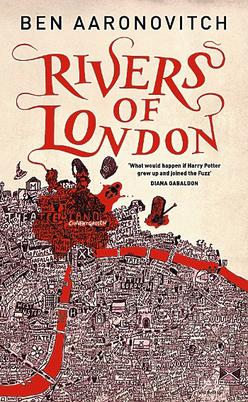
The young man’s new abilities are magical, the adventure revolves around a series of brutal and graphic murders and the pivotal driving forces in the plot are not just inspired by, but taken straight from English folklore. Also, the entire story is in modern day London with enough detail about the setting itself to leave you in no doubt that the author is themselves a denizen, and fan, of the capital. Perhaps it’s my own fault for not expecting two books that I picked up in a rush in a London airport to be based in London, but the similarities between Mieville’s King Rat and Aaronovitch’s Rivers of London were stark when reading consecutively!
The Rivers of London series is one of the most, if not the most, successful urban fantasy series of recent years. I have, of course, heard a lot about it since it was first launched with this eponymous first book in 2011. In fact, I recall it being recommended as a new release from an exciting new author at the time. Now, 13 years after the first book, and a remarkable 9 novels, 5 novellas, 1 short story collection and several Graphic novels later, I am final joining the party. A little bit late I know but I like to think fashionably so.
What surprised me most about the book was that I was disappointed by it. There was nothing glaringly wrong, it was fine, but it was just fine. Maybe my expectations were too high from the stellar reputation of the series, maybe it was indeed too similar to the just-finished-reading King Rat or maybe Aaronovitch gets a lot better as he goes throughout the series. Shout-out to Pratchett’s Discworld as the prime example here. Whatever the reason behind it, I was disappointed with this entry, albeit not disappointed enough that I won’t read the next one
Peter Grant was fairly dull protagonist. He brought no sense of wonder to discovering a magical world of ghosts and wizards co-inhabiting the London he grew up in. I’ll give Aaronovitch the benefit of assuming this was intentional and that by assuming a (trainee) police officer as the lead, he had intentionally created a character that takes everything unexpected in stride. However, this approach to the world from the protagonist takes away the chance for the audience to appreciate the magic of discovering the world with him. In a High Fantasy novel, the inhabitants should face the magical and wondrous as routine but the main advantage of dropping your main character into a new world along with the reader is being able discover the world alongside them. Grant’s stoic approach to discovering ghosts and magic were real deprives the reader of any of the joy of discovery.
The supporting characters were more interesting, Nightingale’s introduction as Grant’s wizard mentor was the obvious highlight with his Victorian manner, unspecified age and mysterious background. His complicated “agreements” with the modern Metropolitan Police to allow the existence of his supernatural investigations are delightfully hinted at, without being clearly revealed and leave enough grey areas to be explored more fully later in the series. Beverly Brook maintains the balance of being a memorable romantic interest, an interesting character and a semblance of importance to the plot. Grant’s fellow police officer, Lesley May, provides an alternative to Beverly and also a foil and confidant for Grant’s investigations, while avoiding falling into the trap of being just another love interest. Molly, another with a mysterious past, somehow faded enough into the background that I felt no sense of intrigue about her at all and was then surprised when a reveal did come.
The driving force behind the action, the mysterious murders and the eventual conclusion were fascinating and well written. I loved the thread of the antagonist as it developed and changed throughout the novel, and the aforementioned folklore thread was so artfully done that it felt blatantly obvious as soon as it was revealed, both to the reader and the characters, yet hidden enough that the reveal was maintained as surprising. The main thrust and narrative of the story was compelling and with several twists and turns throughout, the book did avoid any kind of predictability. The fact that Grant never felt like he was in control of proceedings but rather was frantically trying to catch up with the chaos of the events that unfold around him did add to the pacing and tension.
Overall it was definitely a competent story, that I did enjoy, and I will get around to the next entry in the series with the hopes that this is just a case of “first-novel-syndrome”. I think that the flood of success that Aaronovitch has had with this series left me with perhaps unrealistic expectations and while I was hoping to be swept away, Rivers of London just trickled by. (Puns intended and carefully crafted.)
 Zealot Script